The New Sparling Model Has Arrived!
15th Apr 2019
by Courtney Rowland
GFT commissioned a Bolton based taxidermist, Phillip Leggett to create a realistic sparling model. This model accurately represents three adult sparling, which grow up to 30cm and are still present in the River Cree.
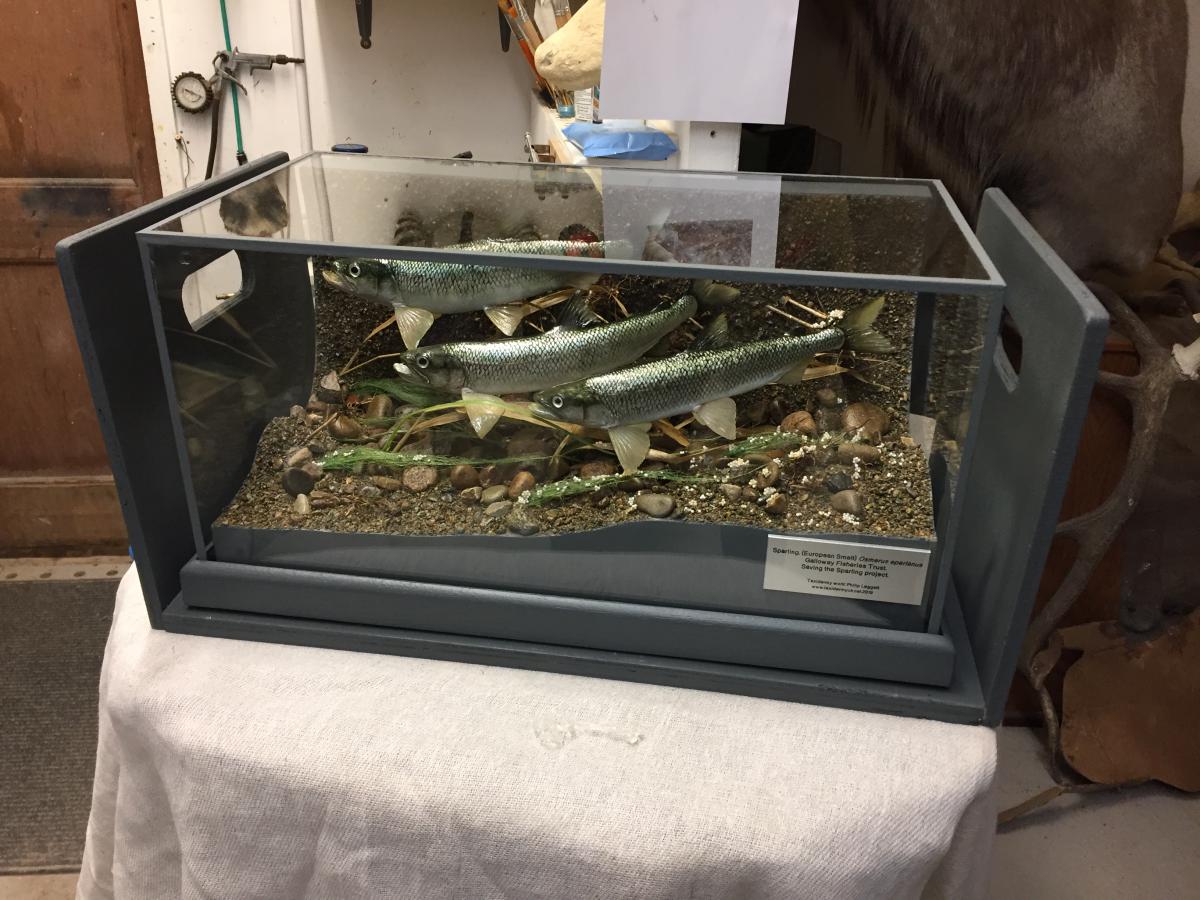
The model was designed with the shoaling behaviour of sparling in mind. The three fish, which include one gravid female at the back, are surrounded by hundreds of eggs along the river bed representing typical behaviour during the sparling spawning period in spring.
If you would like to view the model in person it will be part of the Sparling Exhibit at the Newton Stewart Museum. On the rare occasion over the summer, the model will visit events around Scotland to highlight the projects main focus, Saving the Sparling.
The museum exhibit is open between 2-5pm Monday to Saturday, April 1st to the end of June. Then from July the 1st to the second week in September 10.30am – 5pm and then again from the 3rd week in September until the end of October 2pm-5pm.
Latest News
Restoring local peatlands
In spring 2026, Galloway Rivers Trust undertook 22.5 hectares of peatland restoration around Loch Moan in Dumfries and Galloway. Loch Moan is the source of the River Cree, which is an important river in Galloway for its freshwater fish populations including the very rare Sparling.
Luce Riverwoods Project
The River Luce starts in the hills of southern Ayrshire and makes it way down through New Luce and Glenluce before joining the Solway Firth. Throughout its length it acts as a home to a large variety of aquatic species such as salmon and trout, as well as many invertebrate species.
Removing Broom Caul
Galloway River Trust has secured funding from the European Open Rivers Programme for work to remove the Broom Caul. As part of our work to restore the river habitats of the River Annan catchment, the removal of this caul, or weir, has been identified as a priority action.